October 30, 2006

"... we can know many things just by the look of the eyes when people are silent; ... their whole body is clear ... and each is like an eye, and nothing hidden or artificial, but before one speaks to another the other sees and knows." 

Plotinus, IV, 3 [27]

October 26, 2006

Love is a Sickness

LOVE is a sickness full of woes,
All remedies refusing;
A plant that with most cutting grows,
Most barren with best using.
Why so?

More we enjoy it, more it dies;
If not enjoy'd, it sighing cries—
Heigh ho!

Love is a torment of the mind,
A tempest everlasting;
And Jove hath made it of a kind
Not well, nor full nor fasting.
Why so?

More we enjoy it, more it dies;
If not enjoy'd, it sighing cries—
Heigh ho!
Samuel Daniel. 1562–1619

I wish I could post the song instead of the poem, because it is a song more than a poem for me, (I used to sing it), which portrays very well the perception of love as a sickness, but of the mind, on which a lot of Medieval scholars wrote treatises. They were trying to provide an analysis of its symptoms and suggest cures. And when they were calling it a sickness, they were not speaking metaphorically, No!; they were speaking of a sickness, just like any other sicknesses. For your enjoyment: "Questions on the Viaticum". The seriousness of their preoccupation and their explanations seem mostly funny from the point of view of our knowledge of medicine and human sciences. But I can't keep myself from asking: have we arrived at a better understanding? Have we moved any closer in explaining this feeling (or syndrome, depends on how you approach it)? Or, rather, have we gave up the effort of trying to give an account of it and left the concept (and the thing itself, I don't know what it is, this_thing_called_love) to be exhausted by the consumerism of advertisements and horoscopes? And, lastly, will there be an end to my rhetorical questions? And, loss of words, I sigh!

October 23, 2006

It has been only weeks since I wrote my autumn haiku, and now the time came for me to write one for the winter, for while I sit in my warm and softly lit room, it snows outside. But wait! The trees still have some green leaves. The trees still have green leaves.

These days I wonder which one is better: to dream during the sleep and be reminded of those left aside, swept under the rug in the light of the day; or better not to dream at all. But if everyone dreams, is it possible to choose not to remember? If dreams are gates to our hidden desires and fears, the things we would prefer not to be reminded, the judgments we flee to make, maybe the question is whether one wants to know or not. The curious thing with dreams is that one does not have the choice to decide on that. It is just there, right in one's face. What does it say? It says, "the more you run the more I'll come after you." It is like a psycho postman who is obsessed with getting his mails delivered to the right person by the hand. Ok. I got my mail. So what's next? I don't know.

October 2, 2006

"No, It's Not Fatigue"

No. Fatigue, why?
It's an abstract sensation
of concrete life
-something like a scream
to be screamed,
something like anxiety
to be suffered.
To be suffered completely
Or to be suffered as ...
Yes, to be suffered as ...
That's it: as ...
As what?
If I knew I wouldn't have this false fatigue within me.
F. Pessoa (Alvaro de Campos)

September 24, 2006

first breeze of autumn -
turning of the leaves, to soil,
I breathe in the air.

September 7, 2006


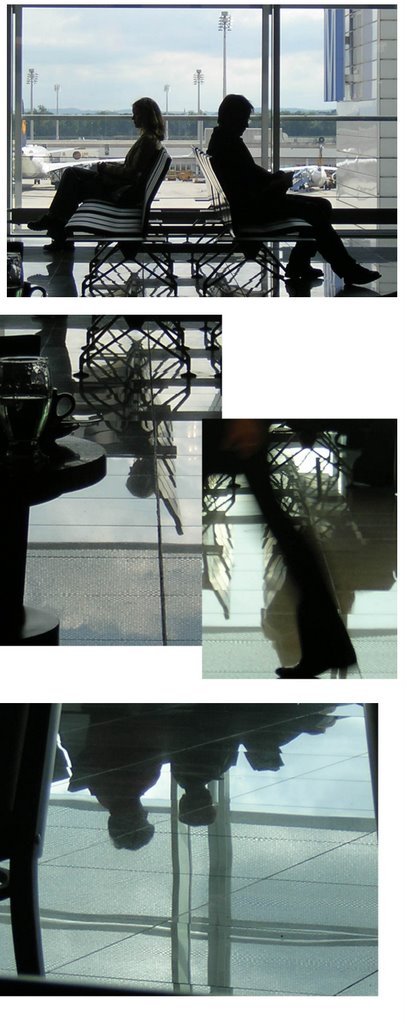
airport inversions, Munich

September 6, 2006

unuseful lists # 2

çalışma zamanı
az konuş, çok iş yap.
araştır
başvur
karar ver
arzula
heyecanlan
üzerine git
vazgeç
geri dön
yeniden başla
yeniden heyecanlan
geri durma
hata yap
yanıl
hatalarını affet
sahip olduğun tek şeyi kucakla

gözle
seyret
öğren
coşkuyla izle
akışa katıl
merak et
izinden git
müziğe uy
seviş

az konuş, çok şey söyle
gözlerini kapa
düşle
düşlerini anımsa
öğrendiklerini unut
benliğini yık
ve sonra
ötekinin imgesinde
yeniden kur
aşk dediğin nedir ki?

August 26, 2006

"Bu kuru söz kalabalığı, sana dokunamadığım için. Seni kollarıma alıp uyuyabilseydim, bunca mürekkep şişede de durabilirdi. Birlikteyken gene erdemli kalabilirdik. Ama bir süre ayrı olmamız gerekiyor, gerçekte böylesi de daha iyi. Ah, kesinlikle güvenebilsek geleceğe …"
D. H. Lawrence


August 20, 2006

laleye güzelleme

A flower am I, the tulip.
Rose and violet are my haloes;
I, the queen of all gardens.
Mehmet the Conqueror

Drink wine! long must you sleep within the tomb,
Without a friend, or wife to cheer your gloom;
Hear what I say, and tell it not again,
"Never again can withered tulips bloom."
Omar Khayyam

August 2, 2006

zifiri sıcak;
dumanın kıvrımında
asılı düşler

August 1, 2006

It is not power that corrupts but fear. Fear of losing power corrupts those who wield it and fear of the scourge of power corrupts those who are subject to it.
...
Fearlessness may be a gift but perhaps more precious is the courage acquired through endeavour, courage that comes from cultivating the habit of refusing to let fear dictate one's actions, courage that could be described as 'grace under pressure' - grace which is renewed repeatedly in the face of harsh, unremitting pressure.

Daw Aung San Suu Kyi

July 30, 2006

Death of Distance

Günün ilk ışıklarıyla şarkılarına başlayacak olanlara imreniyorum. Yaşlı bir kuş gibi yüreğim, suskun. Neşenin parıltıları düşmüş kanadından. Şarkının ilk dizesini unutmuş, sonrasını getiremiyor. Kimbilir hangi havai fişeklerinden ürkmüş, ürktüğü için seyrine varamadığı.

Hiçbir yere gitmeksizin yürüyorum. Sokaklar belirsizce birbirine bağlanıyorlar, ağaran gökyüzü gece lambalarından sızan ışığı körleştiriyor. Tepeden aşağıya yılan gibi kıvrılarak inen dar sokağın son dönemecinde ıhlamur karşılıyor uzaktan, tüm geçmiş baharlarımı yüklenmiş. Bu bahar da geçmekte, havada asılı ıhlamur kokusu gibi.

Yollar birbirine bağlanarak uzanıp gidiyorlar önümde, mesafeyi kısaltmaksızın.

Mesafenin ölümü, neyin ölümü?
Mesafenin ölümü, neyin başlangıcı?

July 18, 2006

An eye for an eye makes the whole world blind.
Gandhi

July 9, 2006

inside - outside

"Pathology has made us acquainted with a great number of states in which the boundary lines between the ego and the external world become uncertain or in which they are actually drawn incorrectly. There are cases in which parts of a person's own body, even portions of his own mental life -his perceptions, thoughts and feelings-, appear alien to him and not belonging to his ego; there are cases in which he ascribes to the external world things that clearly originate in his own ego and that ought to be acknowledged by it."

Sigmund Freud, Civilization and Its Discontents, 1930.

July 1, 2006

the city I love

you teach me how to hate
everyday, once and again

from the incidental passions
to our mundane obsessions
I love to watch your cosmic feature
transform
everyday, inch by inch

I love to travel to your borders
crossing the limits
traversing your routes
watching you move, watching you groove
everyday, every hour of the day

I love to flow into your crowds
getting dispersed, becoming anonymous
your fragile texture, insecure encounters
I am learning to expect the unexpected
in your restless presence
everyday, anew

I love to miss you when I am here
the nostalgia I accumulate
before leaving
you, the city I love
the city I love to hate

bowl in the fishes

nothing more complicated than a full bowl of water and two fishes running away from each other. one fish is yellow, the other is blue. they turn their backs to one another and see the reflection of the other. the reflections are intimidating, they stand next to the image of the self two fishes in a bowl and their lunatic movements. the dull gaze of the outsiders. they don’t hear the music inside. they don’t hear the rhythm of the synchronic movements of the fishes’ tails. the bowl is just small, but it is full of water, blue water, blue as the sky above. and the rain falling from the sky, bounces back from the surface. it doesn’t move the water though, it doesn’t create any shivering. so the reflections stand still, though there is the sky falling, and the rain falling, and big drops falling. the bouncing rivers of water are running down around the bowl. the bowl full of water, and the bowl is water, inside is water, all water, and the outside is all water.

June 18, 2006

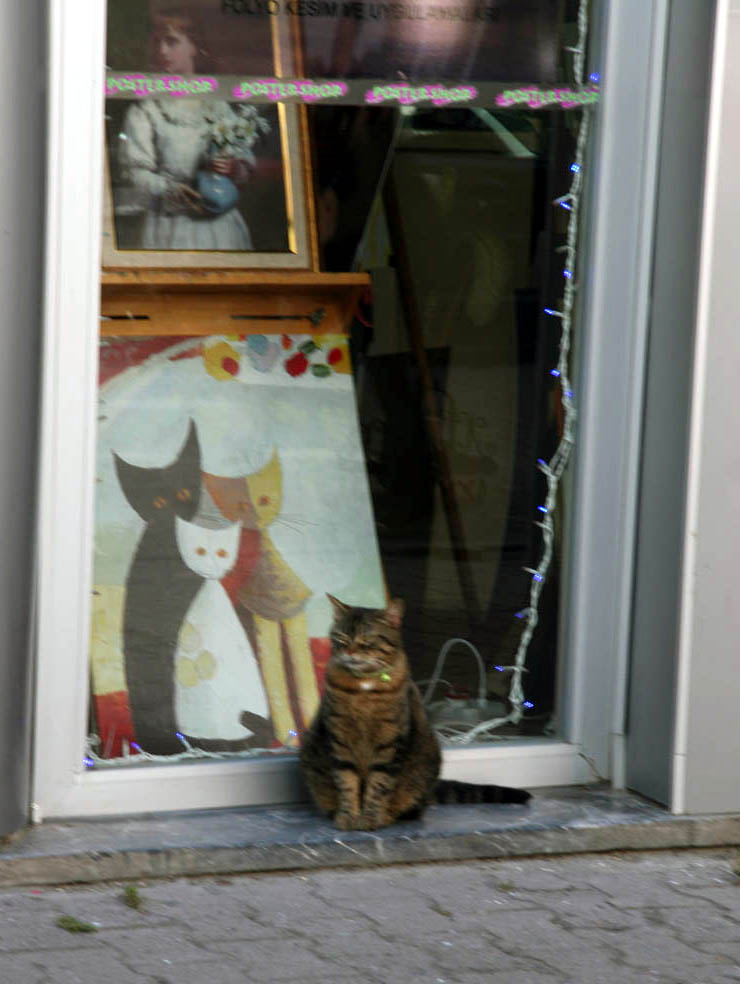
kediler

etcetera etcetera

if something interesting happens every day, it is generally a tiny, mundane, insignificant event, which can not even be called event. How miraculous they are! It is not the good things or happy coincidences, it is a bee visiting the newly blooming flower in pot, the shining sidewalks after a quick summer rain, and today, among many others, it is the baby seagulls beginning to practice timidly their unexperienced wings.
And how flat they become when they are told. However, most of the time it seems they are the things which count most; the etceteras we look down on, extraordinarily mundane, unadorned presences we disdain to share.